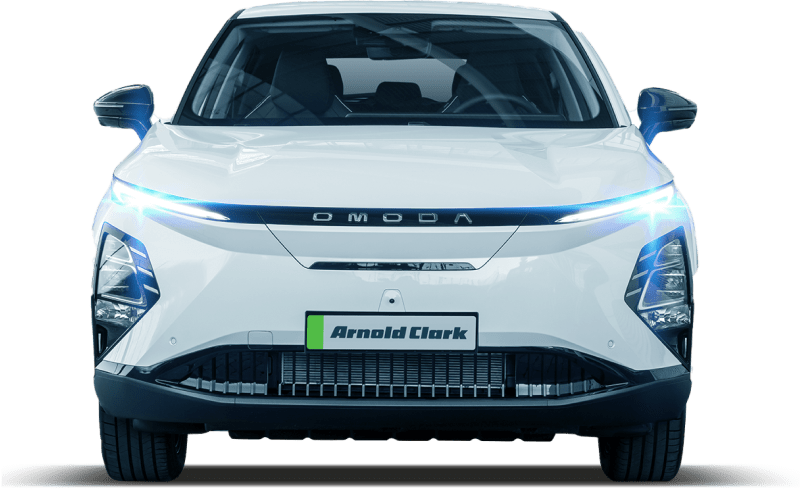
You can charge your electric or plug in hybrid car at home using a home charging point, or you can use one of our ultra-rapid EV chargers via Arnold Clark Charge when charging on the go.
We've created some super useful and easy to use calculators so you can get an estimate of how much it costs to charge an electric vehicle as well as the time it takes to charge.
The cost will depend on what the 'pence per kWh' rate is on your home electricity tariff or the Arnold Clark Charge tariff, You can work out the cost to charge your EV to full by using a simple equation:
Useable battery capacity x electricity cost of your supplier
(in pence per kWh).

^Please note, estimated figures have been provided for comparative purposes only, rates will vary depending on electricity supplier, vehicle type, battery health, charger type, charging conditions, charging losses, electricity tariff and eligibility.
The estimated time to charge will depend on how much of the usable battery capacity you are charging as well as the charger speed you are able to achieve.
Useable battery capacity / charger speed (kW) X 60
(to change to minutes).

60
*Please note, estimated charge times are provided for illustrative purposes only, real life charging times and speeds will vary depending on battery size, temperature, charger type and charging capabilities.
If looking to charge from 20-80%, this would be 60% of your total usable battery capacity. Therefore the number to input in to"Battery Capacity" will be usable battery capacity x 0.6.

Charging at home is the most cost‑effective and convenient way to charge an electric vehicle.
By using a home charger, you can take advantage of EV-friendly energy tariffs to dramatically reduce the cost of charging your vehicle.

Many employers install charging points at work that may be available to use, check the charging tariff and use the calculation above to see how much it could cost you to charge.
Chargers at work are typically fast chargers (up to 22kW) and take longer to charge than a rapid charger, but will allow you to plug in whilst you work.

The average rate to charge an electric car on a rapid/ultra-rapid charger on a public charging network is £0.80p / kWh. (Zapmap, Oct 2024)
For example, charging a VW ID.4 with a usable battery capacity of 52 kWh at a rate of £0.80, it could cost around £29 to charge from 10-80%.

Ultra-rapid EV charging at an ultra-low price. Arnold Clark Charge is our UK-wide ultra‑rapid electric vehicle charging network. Our current charging rate is £0.55p / kWh. (Sep 2025)
For example, charging a VW ID.4 with a usable battery capacity of 52 kWh at a rate of £0.55, it could cost around £20 to charge from 10-80%.

You could enjoy savings whilst charging at home!*
Check out the below estimated charging rates examples:


Day charge

Night charge
(off-peak)
Day charge
Night charge
(off-peak)
*Savings typically apply when charging at home using off-peak electricity tariffs compared to fuel prices.
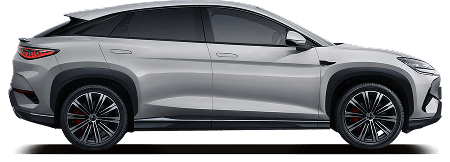
**Estimated day rates are based on the Ofgem Energy Price Cap of £0.2769 per kWh (January 2026). Estimated night rates are based on the Octopus Intelligent Go off-peak tariff of £0.07 per kWh (January 2026). Calculations are based on a brand-new BYD Dolphin Surf with a 43kWh usable battery capacity, charged from 0 to 100%, and a brand new BYD Sealion 7 with an 83kWh usable battery capacity, charged from 0 to 100%. Figures are provided for comparative purposes only. Actual costs may vary depending on electricity supplier, vehicle type, charger type, charging conditions, charging losses, electricity tariff and eligibility.


Ultra-rapid charging at just 55p/kWh on Arnold Clark Charge, plus free coffee whilst you charge! Book a charge, or Pay & Go on our UK-wide EV charging network.
Learn more


Visit our trusted partners at Bumblebee who can deliver UK-wide installation coverage. Whether you need a solar-powered charger, a smart home wall charger, or any other type, Bumblebee has the perfect solution for your home, business, or apartment.
Discover moreThere are three main types of chargers:

Slow chargers use alternating current (AC) rather than direct current (DC), which is then converted to DC by the vehicle’s onboard charger.

Fast chargers use alternating current (AC) which is then converted by the vehicle to direct current (DC). This is the most common type of charger, typically utilised at home or at your destination.

Rapid chargers use direct current (DC) meaning it’s quicker to charge the vehicle. Majority of UK models will use a CCS connector type with a small selection using a CHADeMO connector for their rapid charging.
**May vary depending on charger, vehicle type and the weather.
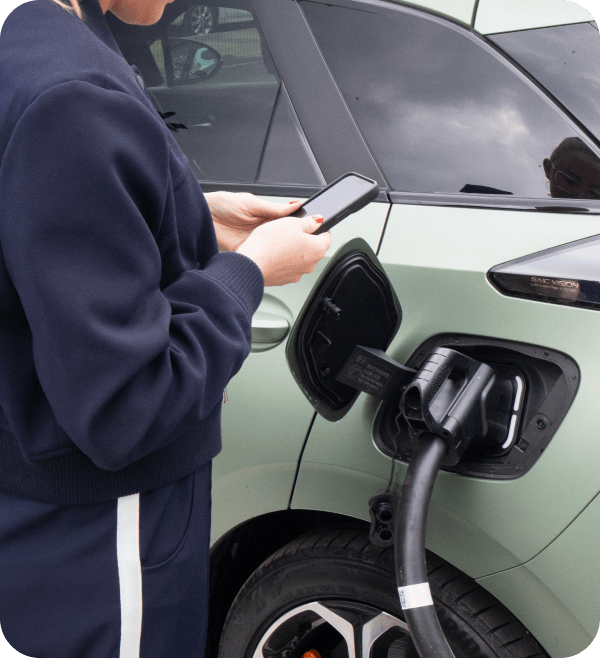
The universal charging connector type for Electric Vehicles is called ‘Type 2’. This connector is used when fast charging. A CCS (Combined Charging System) connector is used when rapid charging on the public network.
The cable for this will be attached to the charging unit, unlike a home charger which can use either a tethered unit, or the type 2 to type 2 cable that will come with the car.
Please note that most plug-in hybrid’s will only have the type 2 connector and not a CCS.


Learn everything about the world of electric from our Innovation Centre Geniuses. Including charging advice, driving tips, fun facts and more - view our education videos, handy guides and latest electric news!
Find out moreGot any EV questions? Speak to the EV experts!
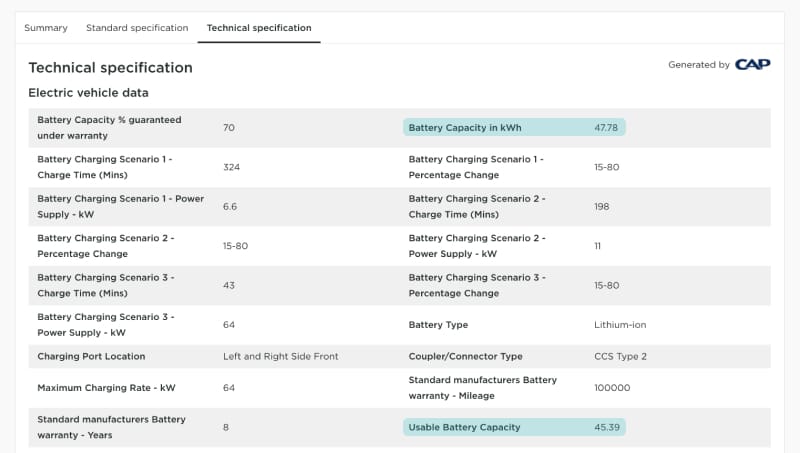
You can discover what your cars battery capacity and usable battery capacity is in the"Technical Specification" section of an EV advert.
Example: